Chair Silhouette Vector Illustration Review
I have spent years stitching designs for clients ranging from corporate merchandisers to Etsy sellers, and I know that a great embroidery project starts long before the needle touches the fabric. It starts with the design itself. Recently, I was evaluating a Chair Silhouette Vector Illustration intended for real-world application, specifically looking at its potential as a machine embroidery design for small business owners and crafters. The product description promises a detailed black and white illustration of a sleek gaming chair, marketed as a file you can download, print, or use for any print-on-demand service. While the versatility is appealing, my goal here is to cut through the marketing noise and discuss how this graphic actually performs when translated into thread.
The First Impression: Mood and Visual Personality
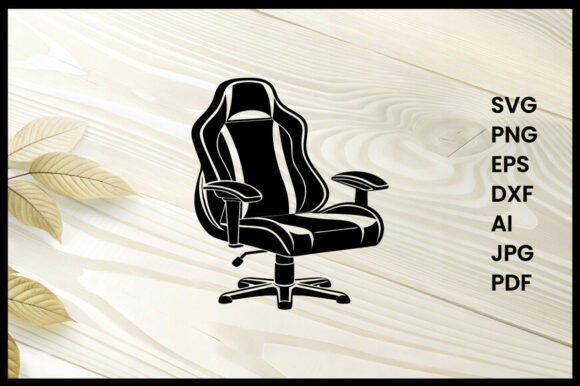
When I first opened the vector file, the immediate feeling was one of modern minimalism. The silhouette captures the essence of a high-end gaming chair—the curved backrest, the armrests, and the base—without getting bogged down in excessive detail. For an embroiderer, this is a double-edged sword. On one hand, the clean lines are inviting; on the other, they demand precision. The mood it creates is urban, tech-savvy, and slightly edgy. It feels like a design that belongs in a home office setup or a dedicated gaming room rather than a traditional farmhouse kitchen.
This visual personality makes it a strong candidate for specific niches. It naturally fits the aesthetic of custom apparel for gamers, tech enthusiasts, or streamers. However, because it is a silhouette, it relies heavily on contrast and shape recognition. In the world of embroidery file usage, this means the background fabric choice becomes critical. A light grey sweatshirt might make the black silhouette disappear, while a dark navy or black fabric could render it invisible unless we utilize a contrasting thread color or a clever applique technique.
Real-World Application: From Screen to Stitch
To truly understand the value of this design asset, I simulated a scenario where I needed to create a personalized gift for a client who runs a small streaming channel. The request was for a unique embroidered patch to be sewn onto a hoodie. This is where the practical judgment comes in. The Chair Silhouette Vector Illustration has a distinct, recognizable shape that would look fantastic as a standalone icon on a chest pocket or a full-back design.
Imagine taking this design and adapting it for a tote bag design. The clean lines would stitch beautifully on canvas, creating a professional-looking logo for a small shop selling gaming accessories. Similarly, for sweatshirt embroidery, the silhouette offers a large, bold statement piece that doesn't require intricate lettering to make an impact. It works well as a central focal point, allowing the wearer to express their hobby without needing words.
However, I also considered its use in more delicate items, such as baby embroidery or nursery decor. Here, the "gaming" theme might feel out of place for a baby shower, but if reimagined as a simple, abstract chair shape, it could work for a child's room. The key is how you interpret the source material. The sleekness of the original design leans towards adult-oriented products, so for handmade product lines targeting families, I would suggest adjusting the context or using it as part of a larger scene rather than a standalone item.
Navigating Technical Challenges
No review is complete without discussing the limitations. When converting a vector graphic into a physical stitched object, several factors come into play. One of the primary concerns with this specific silhouette is the density of the fill areas. If the design instructions call for heavy fill stitch coverage across the entire seat and backrest, the resulting fabric could become stiff and unwieldy, especially on thin materials like t-shirts or lightweight aprons.
I also had to consider the hoop size. While the vector is scalable, the final stitched area must fit within the machine's hoop constraints. If you are working with a small 4x4 hoop, the details of the chair legs and base might get lost or look cluttered. Conversely, on a large commercial machine, the lack of internal detail might make the design look too sparse if not balanced with proper stitch density.
Fabric texture is another major factor. The smooth lines of a gaming chair silhouette do not translate well to highly textured fabrics like bouclé or thick fleece. The stitches will struggle to lay flat, distorting the clean edges of the silhouette. Furthermore, on stretchy fabrics like jersey knit, the tension required for a solid fill stitch can cause puckering. To mitigate this, a sturdy stabilizer is non-negotiable. Without it, the finished product may look amateurish, undermining the professional quality the designer likely intended.
Strategic Placement and Product Value
For Etsy sellers and small shop product creators, the presentation of the final item is everything. A well-executed Chair Silhouette Vector Illustration elevates the perceived value of a garment. Customers associate clean, precise stitching with high-quality craftsmanship. If the design is placed correctly—perhaps centered on the back of a cap or on the front left chest of a polo—it signals attention to detail.
This design is particularly effective for commercial embroidery projects where brand consistency matters. Imagine a boutique selling gaming merchandise; having a consistent, sharp silhouette logo across all their products builds trust. It creates a cohesive brand identity that customers recognize immediately. However, care must be taken with thread colors. Using a standard black thread on a black shirt is a recipe for disaster. Instead, try a metallic silver or a bright neon thread to pop against dark backgrounds, ensuring the silhouette remains visible and striking.
Practical Designer Notes Before You Start
Before you commit this design to your production line, there are a few steps every experienced crafter should take. First, always test the design on scrap fabric that matches your final project material. This allows you to check how the running stitch and satin stitch interact with the grain of the cloth. Second, review the stitch density settings. If the file is dense, consider reducing the density slightly to prevent the fabric from bunching up.
It is also crucial to confirm the licensing terms. The product description mentions it can be used for print-on-demand services, but does that extend to selling finished embroidered goods? Many digital files have restrictions on commercial use. Always verify whether you are allowed to sell the final finished product or if the license is limited to personal use. Additionally, inspect the small details in the vector file. Sometimes, tiny corners or thin lines in a vector can become problematic when digitized, leading to broken stitches or thread breaks.
If you plan to use this for holiday embroidery or seasonal gifts, think about how the theme fits. While a gaming chair isn't a traditional holiday motif, it could be a perfect personalized gift for a gamer friend during the holidays. Pair it with a festive border or text to bridge the gap between the modern subject and the seasonal occasion.
In conclusion, the Chair Silhouette Vector Illustration is a versatile tool for the modern maker. It offers a sleek, contemporary look that fits perfectly into the gaming and tech aesthetics. However, its success depends entirely on execution. By paying close attention to fabric selection, stabilizer usage, and thread contrast, you can transform a simple vector graphic into a stunning piece of wearable art. Whether you are a hobbyist making a unique gift or a business owner expanding your craft business, this design has the potential to be a standout addition to your portfolio—if you approach it with the right technical strategy.